The Space Between — American Sycamore Bowl
The Space Between — American Sycamore Bowl
Hand-Turned American Sycamore Decorative Bowl
Couldn't load pickup availability
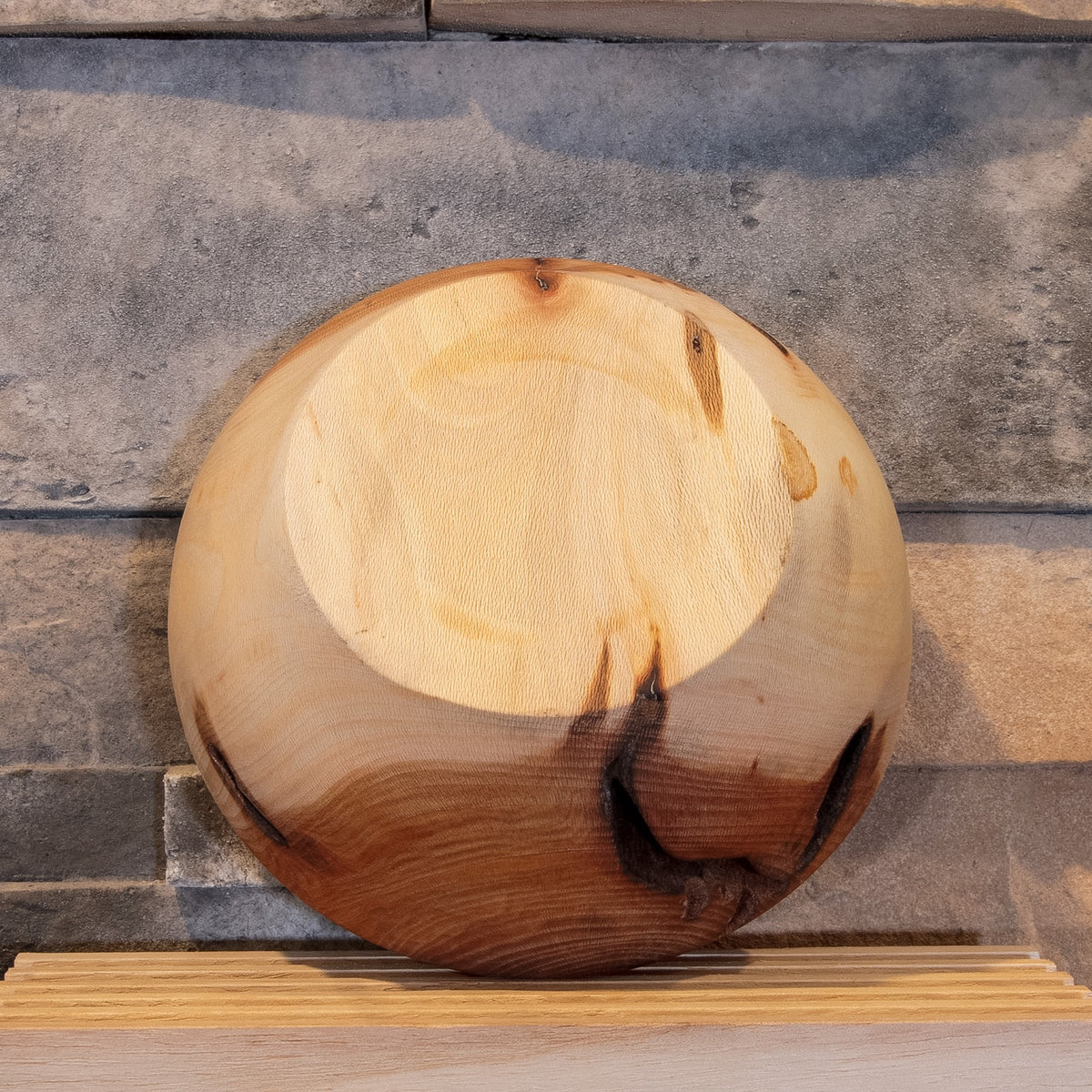
The Space Between began with something that was not part of the plan: openings hidden inside a very wet piece of Sycamore that only revealed themselves as the bowl was rough-turned.
The wood came from a massive Sycamore on a rural Illinois property. The tree had grown near an old farmhouse and was eventually removed because its size and location had made it a hazard to the house. Some of that wood was shared with Gentry Crafted, beginning a path that would eventually send finished pieces back to the person who provided it and leave this piece waiting in the shop for its own answer.
Story / Provenance
When this bowl was first rough-turned in spring 2026, the natural through-voids appeared as material was removed. They were substantial enough to change what the bowl could become, but the remaining wood was sound.
One possibility was resin. Instead, the rough bowl was set aside while the best way forward was considered.
The decision came sooner than the final turning did.
My mother-in-law has worked with wood herself, making spoons and other pieces, and she and my wife were among the people who first drew me toward woodworking. When she saw this bowl in person during the rough-turning stage, her advice was simple: leave the openings open.
I trusted her judgment and immediately knew she was right.
The bowl was dried over the following months and returned to the lathe in August. Its rough form had already established the general proportions, but the final cuts still had to respond to what the wood had revealed. The walls were refined without chasing maximum thinness, and the rim was shaped so the existing openings remained within the wall rather than being cut through the top.
There is a larger woodturning tradition behind that decision. The American Association of Woodturners has documented makers who deliberately incorporate cracks, inclusions, holes and other irregularities as sources of texture, focal interest and negative space. The Smithsonian American Art Museum describes pioneering turner Melvin Lindquist as deliberately working with natural cracks, holes and uneven edges, helping establish a way of seeing characteristics once treated as defects as part of the beauty of contemporary turned wood.
The Space Between belongs to that idea in its own quieter way. Nothing was repaired or filled. The openings that appeared in the wood were simply allowed to remain part of the finished form.
About This Piece
The Space Between is hand-turned from American Sycamore (Platanus occidentalis) and measures approximately 5-5/8 inches in diameter × 2-1/2 inches high.
Sycamore itself can carry another kind of visual surprise. Its broad rays can create distinctive flecking on appropriately oriented surfaces, and American Sycamore is sometimes referred to as “lacewood” because of that lace-like figure. Here, pale and warmer-toned grain moves around the bowl while the natural through-voids introduce literal negative space through the wall.
The openings are smooth and firm, with no loose or fragile wood at their edges. The bowl sits flat and stable.
Because the voids pass completely through the wall, this piece is best suited to display or dry contents such as wrapped candy, larger candies, nuts or similar snacks rather than liquids or very small loose foods.
It is finished with walnut finishing oil followed by a separate microcrystalline wax finish.
Details
Hand-turned American Sycamore (Platanus occidentalis)
Approx. 5-5/8" diameter × 2-1/2" high
Final weight: 8.9 oz
Natural through-voids intentionally left open
Walnut finishing oil and microcrystalline wax finish
For decorative use and suitable dry contents
One of one
Part of The Gathering
Share